|
 |
||||||||||||||
 |
|
||||||||||||||
|
|||||||||||||||
 |
 |
 |
 |
 |
 |
 |
 |
 |
|||||||
 |
 |
 |
 |
 |
 |
 |
|||||||||
 |
|||||||||||||||
|
|||||||||||||||
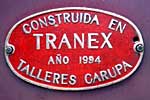
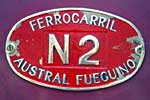
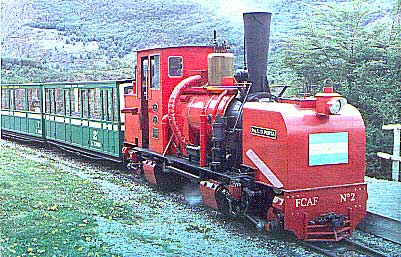
Las locomotoras del FCAF Las máquinas originales Nº 1, era "Rodrigo" hoy 'Muratgia', 0-6-0 diésel por Orenstein y Koppel Nº 2 "Nora", 0-4-0+0-4-0 Garratt, vea abajo para cambios recientes Esta máquina, una de las pocas máquinas a vapor construida completamente en la Argentina. El origen de su diseño es las Garratt tipo K1 y K2. Ellas fueron construidas por la empresa Beyer, Peacock en 1909 para los FFCC del Gobierno de Tasmania (Australia). Después de una historia muy convulsionada se restaura la K1 para uso en el Welsh Highland Railway (FC de la Tierra Alta de Galia) en el Reino Unido. Las placas de bronce a los lados de su cabina indican su número y los detalles de su construcción en los talleres Carupa, que se ubican en la zona norte del área metropolitana de Buenos Aires.
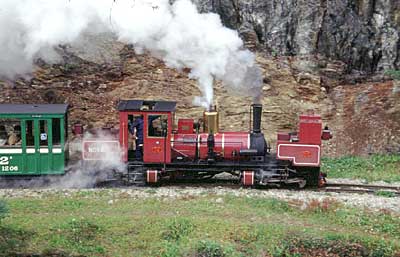
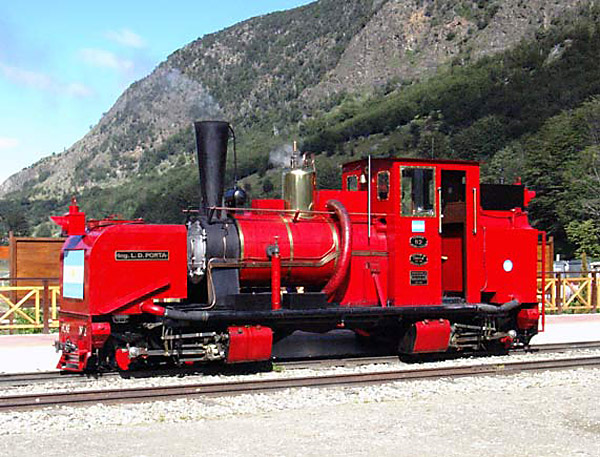
Nora fue construida a una escala reducida para la trocha de 50cm. En el tiempo de su construcción en 1994, una segunda serie de piezas fue hecha. Es posible que algún día se ensamblen. Las Garratt del tipo K y Nora son diferentes de todas las otras Garratt porque tienen sus cilindros al centro de la máquina. Las tuberías de vapor son más cortas, pero los cilindros calientes están debajo de los pies de la tripulación. Nora aproximándose a Puente Quemado en 2001, abajo. El rastro de vapor que sale de las válvulas de seguridad indica que el maquinista está bien preparado para la pendiente Macarena al otro lado del puente. Los tanques provisorios para agua son visibles sobre el tanque original delantero.
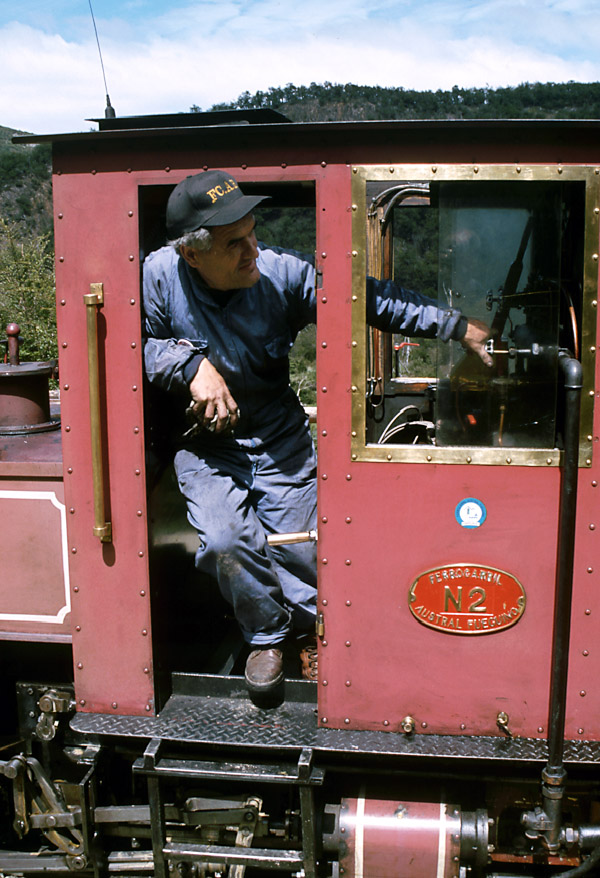
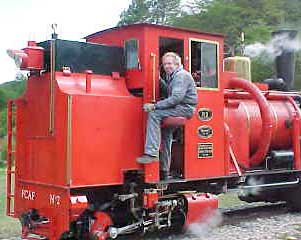
Las máquinas del FCAF marchan con tripulación de uno, lo cual es posible porque su combustible es petróleo. Sobre la trocha de 50 cm las cabinas no son grandes, y sería difícil hacer espacio suficiente para un foguista. El maquinista Chris Parrott se cuelga de la cabina de "Nora" en la parada a la mitad del viaje. Actualmente Chris comparte su vida entre el FC Tal-y-llyn en Galia y el FCAF. Favorecido porque los veranos están en partes opuestas del año.
Nº 3 "Camila", 2-6-2T por Winson Engineering
Nº 5,
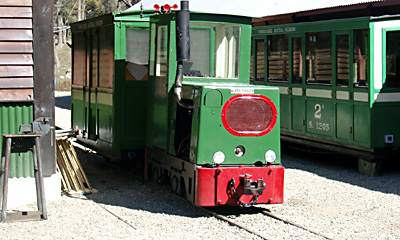
Se ve en esta foto por Martin Bane una de las Ruston al frente del taller principal. Desarrollo reciente Los aspectos claves de las máquinas a vapor remodeladas y las nuevas incluyen: Ya hay que hacer unas de las tareas notadas arriba, o mejoradas de nuevo cuando se hacen las modificaciones de la segunda etapa. Esta etapa va a incluir también lo siguiente: Por consecuencia de todas estas obras el aspecto de las máquinas originales es muy diferente. También hay máquinas nuevas. Así debemos notar de nuevo la flota. No más la "Nora", ahora la "Ing. L.D. Porta".
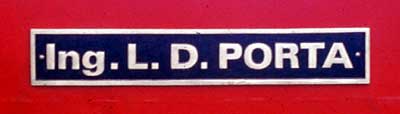
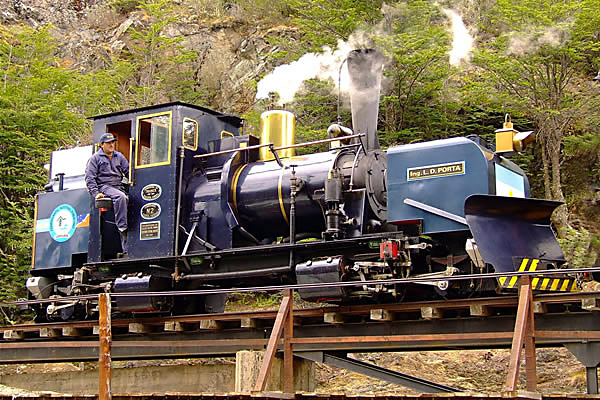
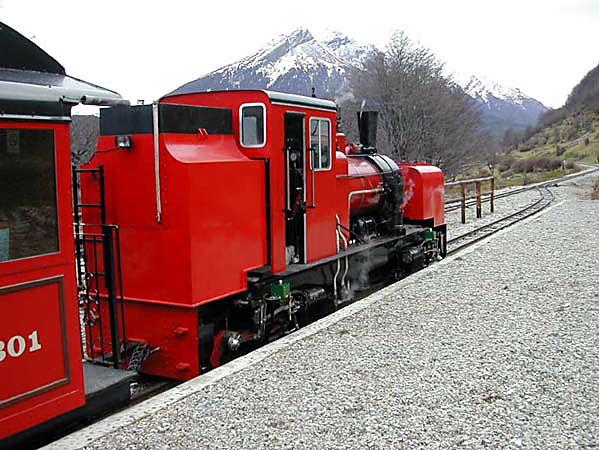
Siguiendo unos años de servicio, se remodeló muy extensivamente Nora bajo el mano de Shaun McMahon, el ingeniero en jefe del ferrocarril. Hoy es muy diferente. Se ha intentado una reconstrucción, pero se adelantó por razón de roturas mecánicas severas en el comienzo de 2001. Ahora su nombre es Ing. L.D. Porta en honor del ingeniero argentino bien conocido de máquinas a vapor. La locomotora es mucho más poderosa que anteriormente y es más de capaz remolcar todos los coches de pasajeros a una vez. Como se ve en las fotos siguientes tiene un aspecto muy diferente con un tanque delantera curvada, que da pensamientos de las Beyer Garratt de los años 30 y 40 y un tanque trasero con aspecto de uno que ha caído de un de una SAR (FC Sudafricano) clase NG/G16.
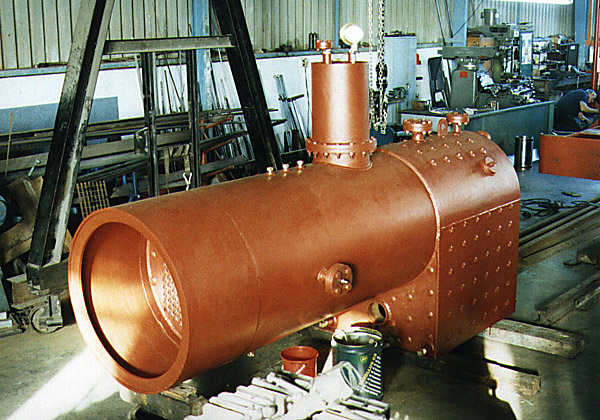
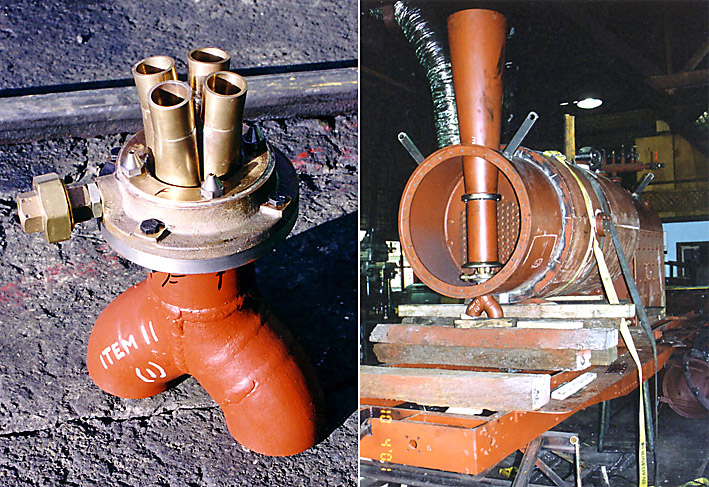
Una caldera de repuesto estaba en reserva para la construcción de la segunda Garratt. Se modificó con tapones fusibles, manómetro adicional, un contador de altura de la espuma, quemador rotativo y muchísimo aislamiento térmico.
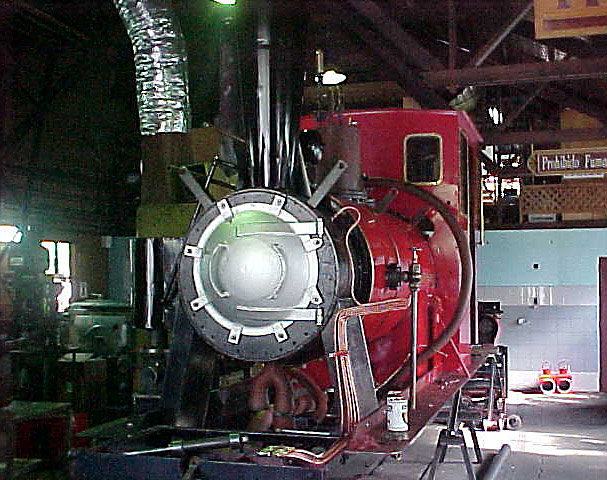
Estas fotos muestran el sistema de escape Lempor con su kordina de cuatro bocas y difundidero en la caja de humos.
La caldera con la mayoría de sus accesorios y la cabina están sobre un soporte provisorio. Se ve claramente la posición más alta de la caldera.
Los bogies motrices fueron equipados con ejes y ruedas nuevos y reequilibrados, llantas de perfil de alta adhesión, nuevos cigüeñales, lubricación mecánica de abasto proporcional, chorros de vapor para limpiar los rieles, arenadores a aire comprimido, y equipo quita arenas, etc Se ve debajo los elementos nuevos como la caldera más elevada, nuevas cisternas más grandes, chimenea y escape nuevos, y los tubos de vapor principales saliendo desde la válvula reguladora detrás de la cúpula. Otras cosas de nota son el contador de altura de la espuma en frente de la cúpula, el profundo aislamiento térmico sobre la válvula reguladora, los tubos a vapor, el tubo de abasto de inyector a la válvula unidireccional en primer plano, arenero a aire comprimido, nuevo diseño de cigüeñales y cojinetes de rodillas para la biela excéntrica. El escape de la bomba de aire es independiente de la chimenea como parece ser la buena práctica moderna.
Las modificaciones de la primera etapa tenían la resultad de agrandar la potencia continua de la máquina. La segunda etapa modificó muchas de las partes mecánicas para aprovecharse del poder adicional. Un equipo notable era el inversor de marcha a rosca obtenida de una de las 2-10-2 abandonadas del RFIRT. Una vista trasera muestra la loco un poco más tarde. El asiento giratorio es evidencia no solo de la experiencia pasada del Ingeniero Shaun McMahon en las NG/G16 del FC Alfred County pero también la línea abierta del FCAF sin puentes cerrados.
La Ing. L.D. Porta en cargo de un tren de prueba al fin de 2002.
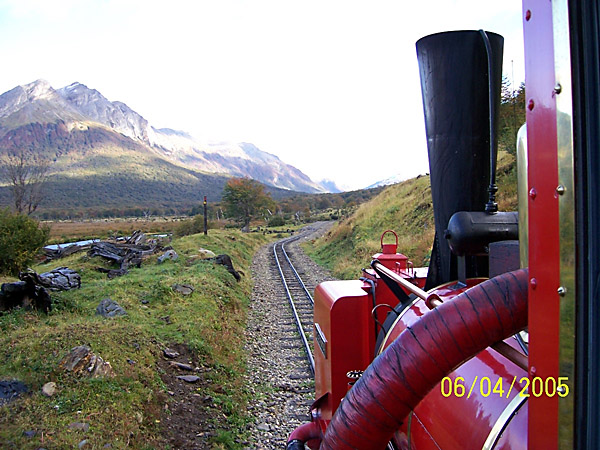
Una vista desde el puesto de conducción mostrando los tubos vaporeros prominentes saliendo de la válvula reguladora antes de su recolocación en un sitio menos visible como se ve en la foto que sigue.
Más al presente, se ha redecorado la máquina de azul. También se ve claramente el quitanieves llevado durante el invierno.
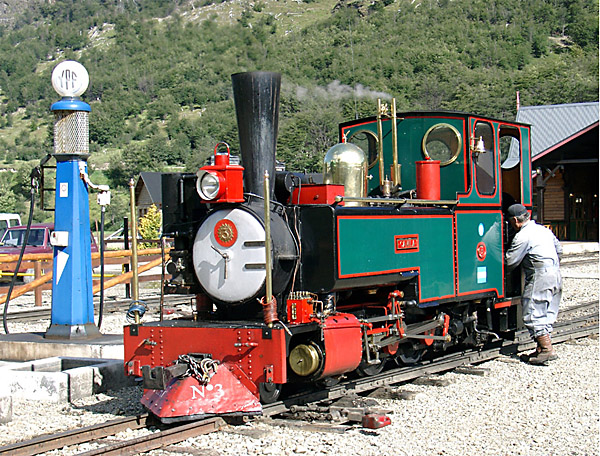
Una segunda etapa de las modificaciones de la máquina fue hecha en los dos años siguientes. Estas modificaciones dieron cuenta a los avances en el diseño de los pasajes para el vapor hechos por el Ing. L. D. Porta y otros en los años recientes. Recibieron muchos pensamientos y atención el aislamiento de la caldera, cilindros y tubos para el vapor, el sistema de lubricación y los mandos en la cabina. No. 3 Camila Siguiendo la primera etapa de la remodelación en 1999, su capacidad motriz en el viaje afuera incrementó de 5 coches a siete sobre el pendiente máximo de 35,7‰, un incremento de 40%. La mayoría del incremento era por el escape Lempor, pero también ayudaban mejoras en el arenador a aire y el quemador de combustible, la introducción de tratamiento de agua Porta, y una completa revisión mecánica. Se reemplazó la bomba de aire comprimido por una construida por el FC Talyllyn. Camila en el depósito de la estación Fin del Mundo mostrando la alta chimenea afilada que es el disfundero del escape Lempor.
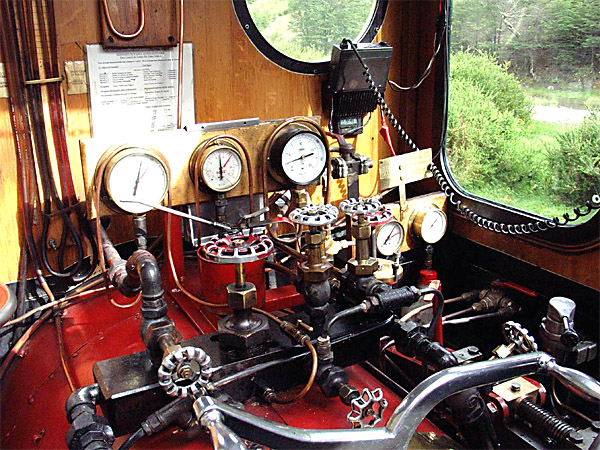
Mucha atención ha sido dada a los ergonómicos de los mandos dentro la cabina porque las máquinas del FCAF llevan un solo tripulante.
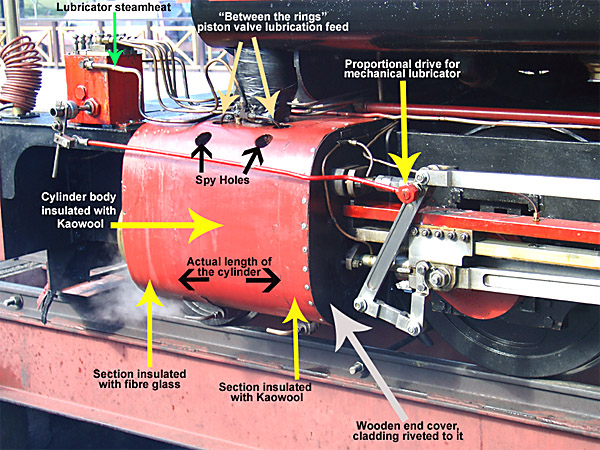
Esta foto proveída por Shaun McMahon, muestra unos de los mejoramientos en la zona de los cilindros. Es saludable notar que tantos ingenieros de vapor en tiempos pasados no tomaron en cuenta los beneficios importantes de asegurar que los tubos vaporeros eran aerodinámicos y que proveyeron la caldera, los cilindros y todas partes del circuito vaporero con amplio aislamiento térmico.
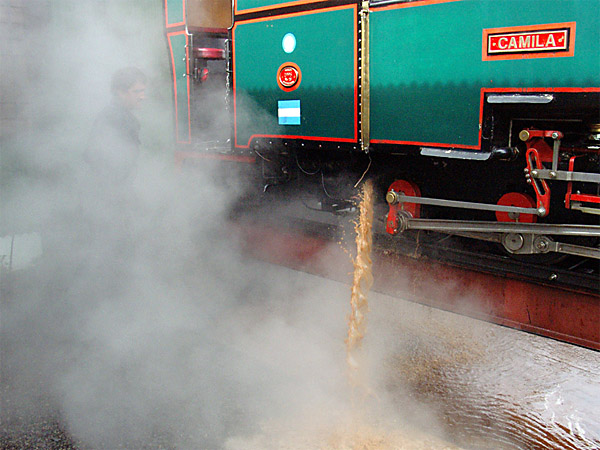
El sistema de lavada de calderas Porta necesita el tratamiento solo dos veces cada año, en lugar de una vez cada semana que era la norma en la mayoría de los ferrocarriles antiguos. La práctica moderna es mantener una sopa marrón espesa, no agua clara.
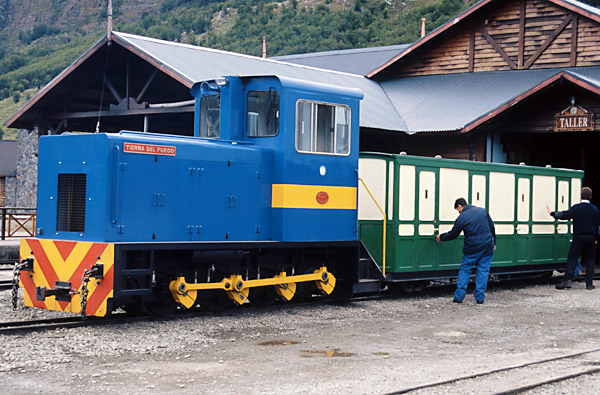
Nº 4, "Tierra del Fuego", 0-6-0 Diésel
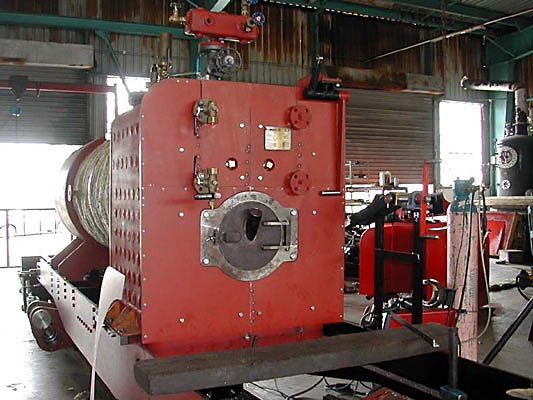
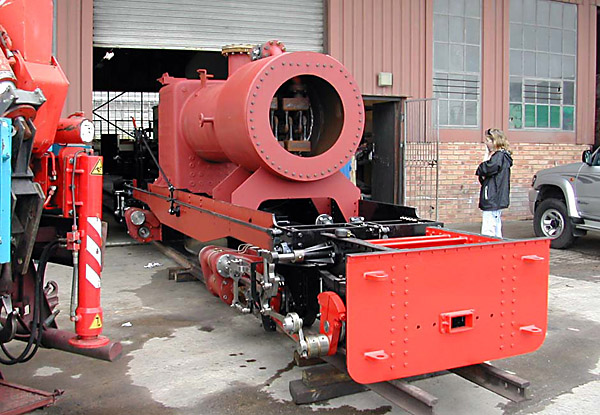
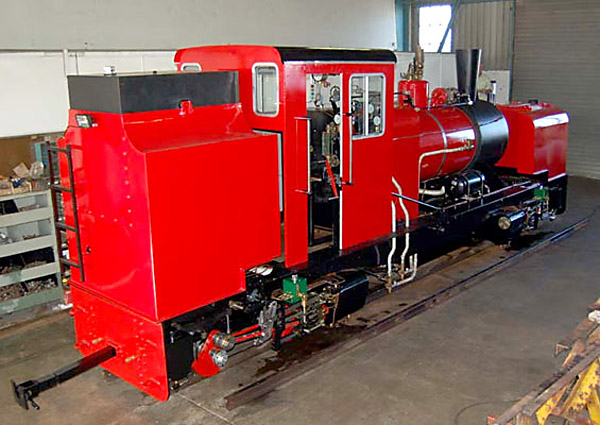
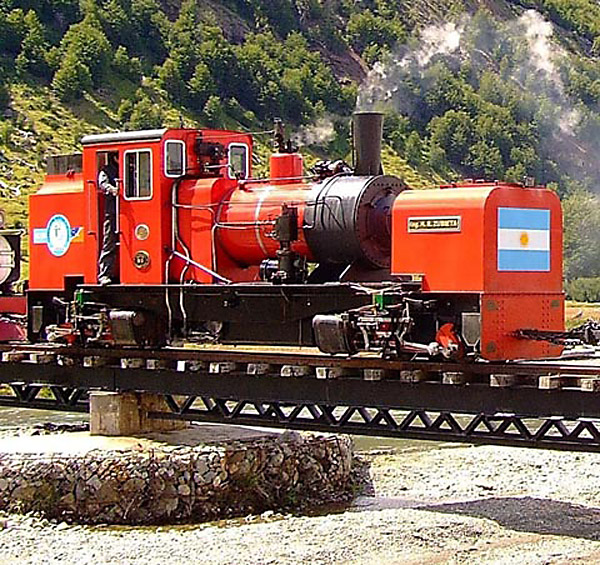
No. 6, 'Ingeniero H. R. Zubieta'. Fue construida esta nueva máquina por Girdlestone Rail, en Port Shepstone sobre el litoral austral de Natal (Sudáfrica). Su peso es 10.000kg y su potencia es 160cv. Entró servicio en 2006. Su denominación conmemora al Héctor Rodríguez Zubieta, distinguido ingeniero naval argentino que tenía asociaciones fuertes con Ushuaia y que había sido partidario del ferrocarril Esta foto, tomada en Puerto Shepstone, muestra la caldera con su fogón Belpaire de nuevo diseño, en lugar del cilíndrico cuando se usaba la caldera sobre Nora.
La caldera está sobre sus suportes y montada sobre los bogies.
La máquina completa antes su envío.
Ing. H. R. Zubieta acoplado a Camila en Puente Quemado.
Y en cargo de un tren de prueba en la estación La Macarena antes de armar las placas de nombre y de número.
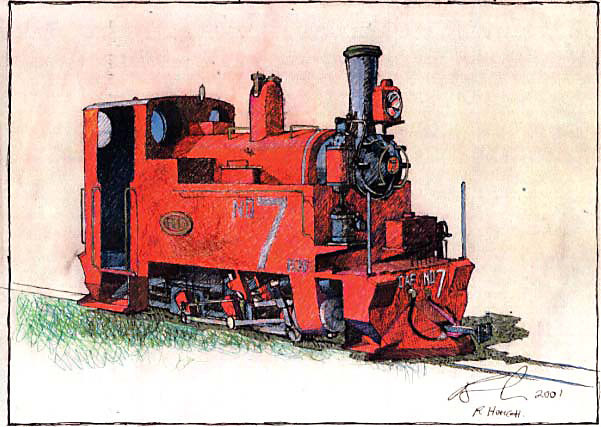
Durante unos años el ferrocarril estaba pensando sobre la construcción de una máquina simple, posiblemente una 0-6-2T o una 2-6-2T. Ésta incorporaría más innovaciones de alta tecnología que están sido investigadas por Shaun McMahon en su cargo corriente en INTI (el Instituto Nacional de Tecnología Industrial) en Buenos Aires. Se ve debajo una impresión de artista de la nueva N° 7.
Fuentes 31-7-12 |
|||||||||||||||
 |
|
|
|
|
|
|
|
|
|
|
|
|
|
|
|
Capítulo 10
El fc penal y el 'Tren del Fin del Mundo'
Guía al sitio